Showing posts with label Type0082. Show all posts

Saturday, October 28, 2017

0194. The Mice that Ate Iron

From The Panchatantra of Vishnu Sharma, translated by Arthur W. Ryder, online at: The Gold Scales.

Notes. See the notes to this version of the story: The Stolen Plow.

Summary: A merchant cheats a businessman, claiming that mice ate the the businessman's iron balance, but the friend finds a way to win in the end.

Read the story below:


THE MICE THAT ATE IRON


In a certain town lived a merchant named Naduk, who lost his money and determined to travel abroad. For

The meanest of mankind is he
Who, having lost his money, can
Inhabit lands or towns where once
He spent it like a gentleman.

And again:

The neighbour gossips blame
His poverty as shame
Who long was wont to play
Among them, proud and gay.

In his house was an iron balance-beam inherited from his ancestors, and it weighed a thousand pals. This he put in pawn with Merchant Lakshman before he departed for foreign countries.

Now after he had long travelled wherever business led him through foreign lands, he returned to his native city and said to Merchant Lakshman: "Friend Lakshman, return my deposit, the balance-beam."

And Lakshman said: "Friend Naduk, your balance beam has been eaten by mice."

To this Naduk replied: "Lakshman, you are in no way to blame, if it has been eaten by mice. Such is life. Nothing in the universe has any permanence. However, I am going to the river for a bath. Please send your boy Money-God with me, to carry my bathing things."

Since Lakshman was conscience-stricken at his own theft, he said to his son Money-God: "My dear boy, let me introduce Uncle Naduk, who is going to the river to bathe. You must go with him and carry his bathing things."

Ah, there is too much truth in the saying:

There is no purely loving deed
Without a pinch of fear or greed
Or service of a selfish need.

And again:

Wherever there is fond attention
That does not seek a service pension,
Was there no timid apprehension?

So Lakshman's son took the bathing things and delightedly accompanied Naduk to the river.

After Naduk had taken his bath, he thrust Lakshman's son Money-God into a mountain cave, blocked the entrance with a great rock, and returned to Lakshman's house.

And when Lakshman said: "Friend Naduk, tell me what has become of my son Money-God who went with you," Naduk answered: "My good Lakshman, a hawk carried him off from the river-bank."

"Oh, Naduk!" cried Lakshman. "You liar! How could a hawk possibly carry off a big boy like Money-God?"

"But, Lakshman," retorted Naduk, "the mice could eat a balance-beam made of iron. Give me my balance-beam, if you want your son."

Finally, they carried their dispute to the palace gate, where Lakshman cried in a piercing tone: "Help! Help! A ghastly deed! This Naduk person has carried off my son his name is Money-God."

Thereupon the magistrates said to Naduk: "Sir, restore the boy to Lakshman."

But Naduk pleaded: "What am I to do? Before my eyes a hawk carried him from the river-bank."

"Come, Naduk!" said they, "you are not telling the truth. How can a hawk carry off a fifteen-year-old boy?"

Then Naduk laughed outright and said: "Gentlemen, listen to my words.

Where mice eat balance-beams of iron
A thousand pals in weight,
A hawk might steal an elephant;
A boy is trifling freight."

"How was that?" they asked, and Naduk told them the story of the balance-beam. At this they laughed and caused the restoration of balance-beam and boy to the respective owners.

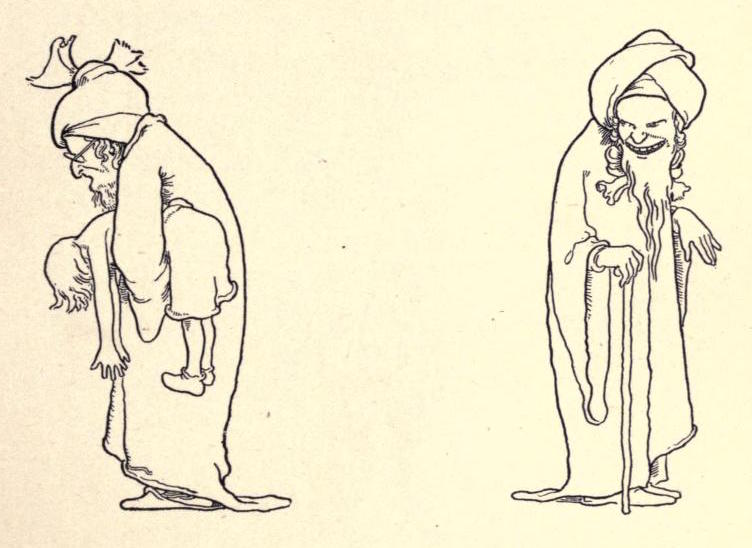

Sunday, August 6, 2017

0132. The Dishonest Friend

From The Giant Crab, and Other Tales from Old India by W. H. D. Rouse with illustrations by W. Robinson, online at: Internet Archive.

Notes. See the notes to this version of the story: The Stolen Plow.

Summary: A man cheats his friend, claiming that a rat ate the man's plough, but the friend finds a way to win in the end.

Read the story below:


THE DISHONEST FRIEND


There was once a man who went on a journey, and he asked a friend to take charge of his plough till he should return. The friend promised to take great care of it. But no sooner was the man gone than he sold the plough and put the price in his own pocket. Was not that a mean trick to serve a friend?

The man came back, and asked his friend for the plough.

“Oh, I am so sorry,” the friend replied; “my house is infested with rats, and one night a very big rat came and ate it up.”

“Ah well,” said the man, “what can’t be cured must be endured! It must have been a very big rat, though.”

“It was,” said the other, “very big.”

You must not suppose this man was quite such a fool as he seemed. You will soon see why he did not make a fuss about his plough.

Next day he took his friend’s son out for a walk. When they had gone some distance he took the boy to another friend’s house, and told this friend to keep the boy safe, but not to let him go out of the house till he returned.

Then he ran back to the boy’s father.

“Where is my boy?” asked the father.

“Your boy? Oh, I remember—a hawk swooped down and carried him off.”

“Oh, you liar! oh, you murderer!” said the friend. “Come before the judge, and then we shall see.”

“As you please,” said the man.

So they went to the court.

“What is your complaint?” asked the judge.

“My lord, this man took my son out for a walk with him, and came back alone, and now he says a hawk carried him off. He must have murdered the boy! Justice, my lord, justice!”

“What is this?” asked the judge sternly. “Come, my man, tell the truth.”

“It is the truth, my lord,” said the man; “he came with me for a walk, and was carried away by a hawk.”

“Nonsense!” said the judge. “Who ever heard of a hawk carrying off a boy?”

“And who ever heard, my lord, of a rat eating a plough?”

“What do you mean?” asked the judge.

The man told his story. Then the judge saw that the man who complained had cheated his friend, and understood what was the reason of this little trick. So he said to the man whose son was lost: “If you find the plough that was entrusted to you, perhaps your son may be found too.”

The man was much annoyed at being found out, but, willy nilly, he had to give the plough back. Then his son was brought back safe to him again. And he began to see that honesty is the best policy.


Friday, July 28, 2017

0093. The Stolen Plow

From More Jataka Tales by Ellen C. Babbitt with illustrations by Ellsworth Young, online at: Internet Archive.

Notes.  This story also appears in the Panchatantra tradition, and it became famous in Europe by being included in La Fontaine's verse fables.  For a collection of different versions, see Dan Ashliman's website: The Iron-Eating Mice.

Summary: A trader cheats his friend, claiming that mice at the man's iron plow, but the friend finds a way to win in the end.

Read the story below:


THE STOLEN PLOW


At one time there were two traders who were great friends. One of them lived in a small village, and one lived in a large town near-by. One day the village trader took his plow to the large town to have it mended. Then he left it with the trader who lived there.

After some time the town trader sold the plow, and kept the money.

When the trader from the village came to get his plow the town trader said, “The mice have eaten your plow.”

“That is strange! How could mice eat such a thing?” said the village trader.

That afternoon when all the children went down to the river to go swimming, the village trader took the town trader’s little son to the house of a friend saying, “Please keep this little boy here until I come back for him.”

By and by the villager went back to the town trader’s house.

“Where is my son? He went away with you. Why didn’t you bring him back?” asked the town trader.

“I took him with me and left him on the bank of the river while I went down into the water,” said the villager. “While I was swimming about a big bird seized your son, and flew up into the air with him. I shouted, but I could not make the bird let go,” he said.

“That cannot be true,” cried the town trader. “No bird could carry off a boy. I will go to the court, and you will have to go there, and tell the judge.”

The villager said, “As you please;” and they both went to the court.

The town trader said to the judge: “This fellow took my son with him to the river, and when I asked where the boy was, he said that a bird had carried him off.”

“What have you to say?” said the judge to the village trader.

“I told the father that I took the boy with me, and that a bird had carried him off,” said the village trader.

“But where in the world are there birds strong enough to carry off boys?” said the judge.

“I have a question to ask you,” answered the village trader. “If birds cannot carry off boys, can mice eat plows?”

“What do you mean by that?” asked the judge.

“I left my good plow with this man. When I came for it he told me that the mice had eaten it. If mice eat plows, then birds carry off boys; but if mice cannot do this, neither can birds carry off boys. This man says the mice ate my plow.”

The judge said to the town trader, “Give back the plow to this man, and he will give your son back to you.”

And the two traders went out of the court, and by night-time one had his son back again, and the other had his plow.